


Contents:
- The Problem: Why Extensions Can Look Obviously Added
- Making Extensions Look Natural vs Simply Hiding Them
- Step-by-Step: How to Achieve a Natural-Looking Result
- Step 1 — Get the Colour Right, Not Just Close
- Step 2 — Choose the Right Method for Your Hair Type
- Step 3 — Placement Is Everything
- Step 4 — Blend During Styling, Not Just at the Salon
- Step 5 — Maintain the Colour Over Time
- Examples: What Good and Poor Natural-Blending Looks Like
- Troubleshooting: When Extensions Stop Looking Natural
- The colour has drifted and there is a visible line
- The bonds are visible at the back of the head
- The extensions feel or look heavier than the natural hair
- The Role of the Initial Consultation in Achieving a Natural Result
Long before the modern hair extension industry existed, women across ancient Egypt, Greece, and Rome were using wigs, hairpieces, and woven additions to alter the appearance of their hair. The desire to change or enhance one’s hair is as old as human vanity itself — but so, it seems, is the challenge of making additions look convincingly real. Roman satirist Juvenal wrote mockingly of elaborate hair constructions in the first century, describing hairpieces that were obviously separate from the wearer’s own head. Nearly two thousand years later, the fundamental challenge remains: how do you make added hair look as though it simply grew from your scalp?
The good news is that in 2026, the answer is better than it has ever been. The combination of advanced attachment methods, ethically sourced Remy hair, and skilled colour-blending means that truly undetectable extensions are now achievable for almost anyone. Getting there, however, requires more than simply booking an appointment — it requires understanding the principles behind a natural result and applying them consistently.
The Problem: Why Extensions Can Look Obviously Added
Before exploring the solutions, it is worth being precise about the failure modes. Extensions look unnatural for a small number of predictable, identifiable reasons, and understanding these is the first step toward avoiding them.
The most common issue is colour mismatch. A shade that looks close in the salon or online can read as strikingly different once it is alongside the wearer’s natural hair in real-world lighting, particularly if the natural hair has highlights, warm undertones, or balayage that the flat-toned extension hair does not replicate. The second most common issue is incorrect placement — bonds or wefts placed too close to the hairline, too low on the head, or in an unnatural distribution pattern that becomes visible when the hair is styled or moves in the wind. The third is weight imbalance — adding too much extension hair creates a heaviness and bulk that natural hair simply does not have, producing an obviously artificial silhouette, particularly from the side.
Making Extensions Look Natural vs Simply Hiding Them
There is an important distinction — often overlooked — between making extensions look natural and merely hiding them. Hiding extensions is a damage-limitation strategy: it involves styling the hair in ways that minimise the chance of attachment points being seen, such as always wearing the hair down, avoiding high ponytails, or never going outside on windy days. This approach acknowledges that the extensions are detectable and tries to manage that fact.
Making extensions look natural is a fundamentally different goal. It means that the extensions are so well matched, so precisely placed, and so correctly maintained that they would not be detected even if someone actively looked for them. This is what the best extension specialists consistently achieve, and it requires attention to every stage of the process — from colour selection through to daily styling habit.
As Emma Clarke, a trichologist and hair consultant with fifteen years of specialist experience working with London salons, puts it: “The difference between extensions that look real and extensions that look added is almost never the quality of the hair alone. It is the quality of the consultation and the skill of the placement. An expert stylist treats the client’s natural hair as a canvas and builds the extensions into it, rather than applying them on top of it.”
The team at Ivana Farisei operates exactly this way. The salon has built its reputation in London on a consultation process that treats every client as an individual rather than a standard set of specifications — considering not just the desired colour and length, but the texture of the natural hair, the direction of natural growth, the typical styling routine, and even the lighting conditions the client most often finds themselves in.
Step-by-Step: How to Achieve a Natural-Looking Result
Step 1 — Get the Colour Right, Not Just Close
Colour matching is the single most important determinant of how natural extensions look. “Close enough” is not close enough. Human hair is not a single flat colour — it contains warm and cool tones, lighter sections at the ends, darker roots, and often subtle variation across different parts of the head. Extensions that replicate this natural complexity are genuinely indistinguishable from the real thing; extensions that provide a flat, even colour read as obviously artificial even to an untrained eye.
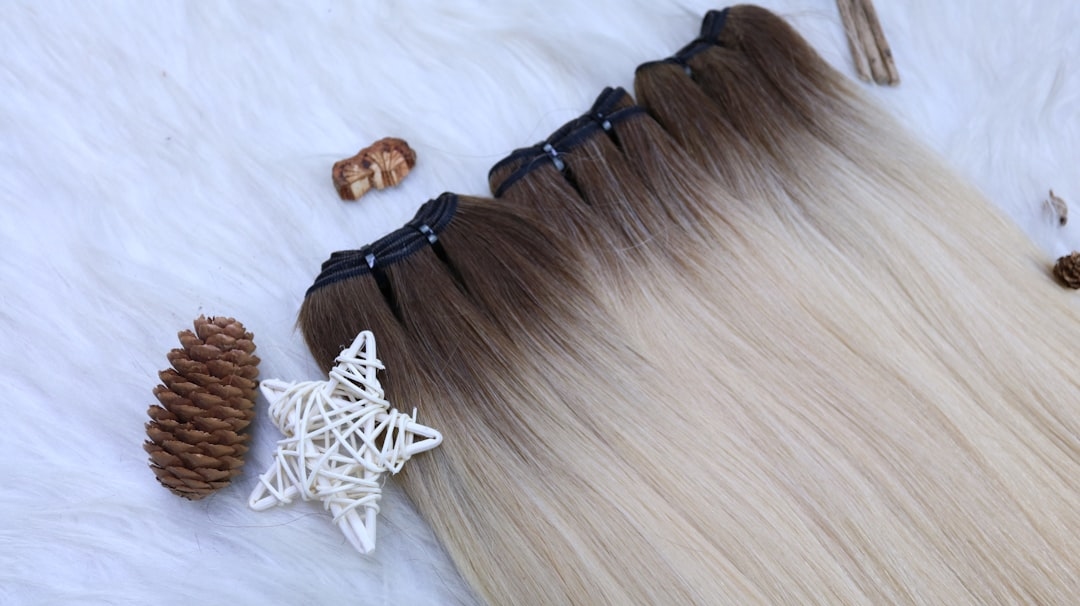
The solution is to select extensions with built-in tonal variation, or to have the extension hair blended specifically for you at the salon. The best option for most clients is to choose an ombre hair extensions finish that mirrors the natural light-to-dark graduation present in nearly all hair, regardless of the base colour. Ivana Farisei offers a custom colour-blending service in which multiple extension tones are combined in the fitting to create a result that moves and catches the light exactly as natural hair does.
Step 2 — Choose the Right Method for Your Hair Type
Different attachment methods produce different levels of natural movement and invisibility. For the most natural result, nano bonds are the benchmark — they are the smallest keratin bond available and lie virtually flush against the scalp, providing individual strand movement that is indistinguishable from natural hair. For fine or thin hair, this method is particularly effective because the small bond size minimises any risk of visible attachment points. At Ivana Farisei, the nano bonds hair extensions service is among the most popular precisely because clients find the results genuinely undetectable in everyday situations.
Tape-in extensions, when fitted in smaller-than-standard sections, can also provide a very natural appearance and are an excellent choice for clients adding volume rather than significant length. The key is ensuring the tape weft does not extend too wide for the section of natural hair covering it — a common error in lower-quality fittings that causes the tape edge to become visible when the hair moves.
Step 3 — Placement Is Everything
Even the highest-quality extension hair will look obvious if it is placed incorrectly. Bonds that are positioned too close to the hairline will be immediately visible. Bonds placed in rows that follow a flat horizontal line rather than following the natural arc of the head will create an artificial layering effect. Bonds that are too close together in one area and too sparse in another will create visible density variation.
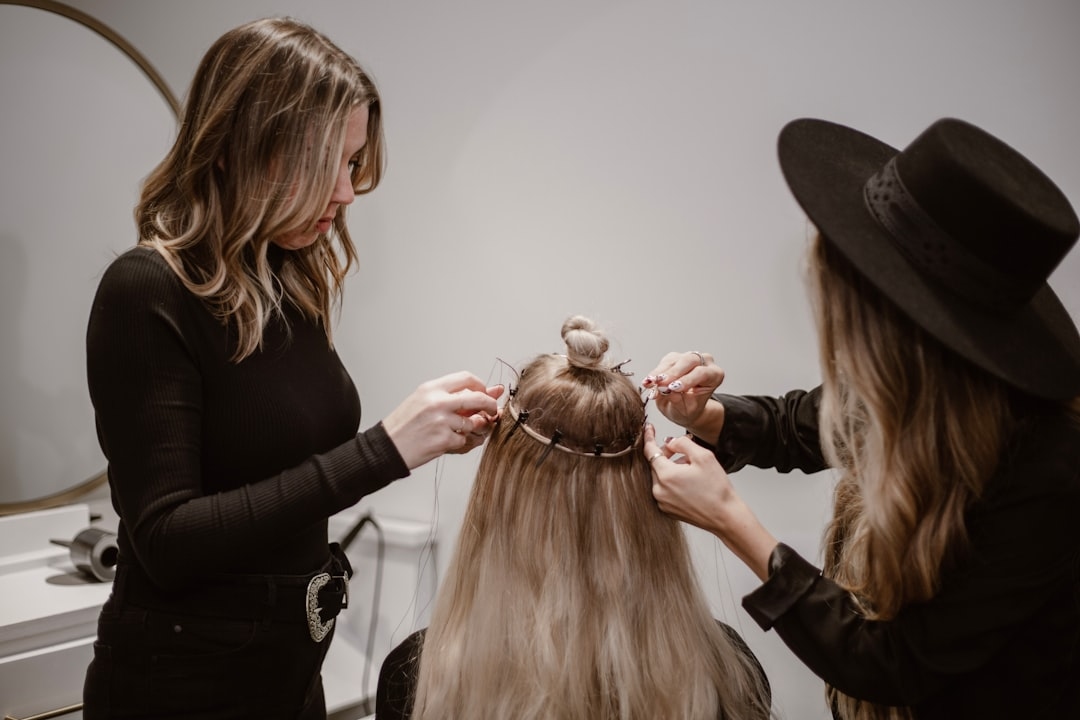
Expert stylists — including the team at hair extensions salon london uk Ivana Farisei — approach placement as a mapping exercise, following the natural growth pattern of the client’s hair and distributing the bonds in a way that mirrors the natural spread of hair across the scalp. This is not a skill that can be rushed or standardised — it requires careful assessment of each individual client and is one of the most important factors separating genuinely specialist salons from basic extension fitters.
Step 4 — Blend During Styling, Not Just at the Salon
Leaving the salon with extensions that look perfect is only the starting point. The way you style your hair at home has an enormous impact on how natural the extensions look day to day. The most effective technique for daily blending is to begin styling from the ends — curling or waving the extensions first — and then bringing the natural hair from the top to integrate with the extensions in the final step. This creates a result where the two types of hair move and sit together rather than separately.
A light wave or curl helps disguise the point at which the natural hair and extension hair meet, which is particularly useful in the first few weeks after fitting, before the natural hair has grown enough to fully integrate with the extension bonds. Straight, flat styles are the most demanding in terms of showing any imperfection in the blend — if you typically wear your hair completely straight, mention this to your stylist at the consultation stage so they can account for it in their placement approach.
Step 5 — Maintain the Colour Over Time
As your natural hair grows and the extensions remain their original colour, the colour match can begin to drift — particularly if your natural hair has significant regrowth variation or if you regularly tone or colour your own hair. Scheduling a colour refresh or toning treatment alongside your maintenance appointment will keep the match accurate throughout the life of the extension set. This is an often-overlooked step that makes a significant difference to how natural extensions continue to look three, four, and five months after fitting.
Examples: What Good and Poor Natural-Blending Looks Like
A client at Ivana Farisei who books a full consultation and nano bond fitting, selects a custom-blended multi-tonal colour set, follows the aftercare routine provided, and attends maintenance appointments on schedule will typically achieve a result that remains genuinely undetectable for six to nine months. Friends and colleagues who are not told about the extensions will not notice them. Photographs taken in full daylight will show no visible attachment points or obvious colour line.
By contrast, a client elsewhere who selects a single-tone extension shade from a swatch card, has the bonds fitted in straight horizontal rows, and skips the maintenance appointment will typically find that the extensions are visible within four to six weeks as the natural hair grows away from the bonds and the colour contrast between the extension shade and the natural regrowth becomes apparent. Neither outcome is primarily about the cost of the hair — it is about the quality of the process from start to finish.
Troubleshooting: When Extensions Stop Looking Natural
The colour has drifted and there is a visible line
This is the most common issue in months three to five of wearing extensions. Book a toning or colour-blending appointment at Ivana Farisei alongside your next maintenance visit. For those who colour their own natural hair regularly, coordinating the timing of colour appointments and extension maintenance so they happen around the same time ensures the match remains consistent.
The bonds are visible at the back of the head
Visible bonds after the first six to eight weeks usually indicate that the natural hair has grown enough to push the attachment points down and away from the scalp. This is normal growth-related progression, not a fitting error. Book a maintenance appointment to have the bonds repositioned back toward the scalp.
The extensions feel or look heavier than the natural hair
Volume imbalance — where the extension hair is noticeably fuller or thicker than the natural hair it blends into — is sometimes the result of too much extension hair being added for the client’s natural density, and sometimes the result of the extension hair being a different texture from the natural hair. A skilled stylist can thin out or layer the extensions at the next appointment to improve the balance. Going forward, a more conservative volume of hair is better matched to fine or medium natural hair than a full, dense set.
The Role of the Initial Consultation in Achieving a Natural Result
The most important moment in the entire process of getting natural-looking extensions is not the fitting itself — it is the consultation that precedes it. A thorough consultation gives the stylist the information they need to make the right decisions on colour, method, placement density, and volume. A rushed or superficial consultation leads to fitting decisions that seem reasonable in the moment but produce a result that never quite convinces in real-world lighting and movement.
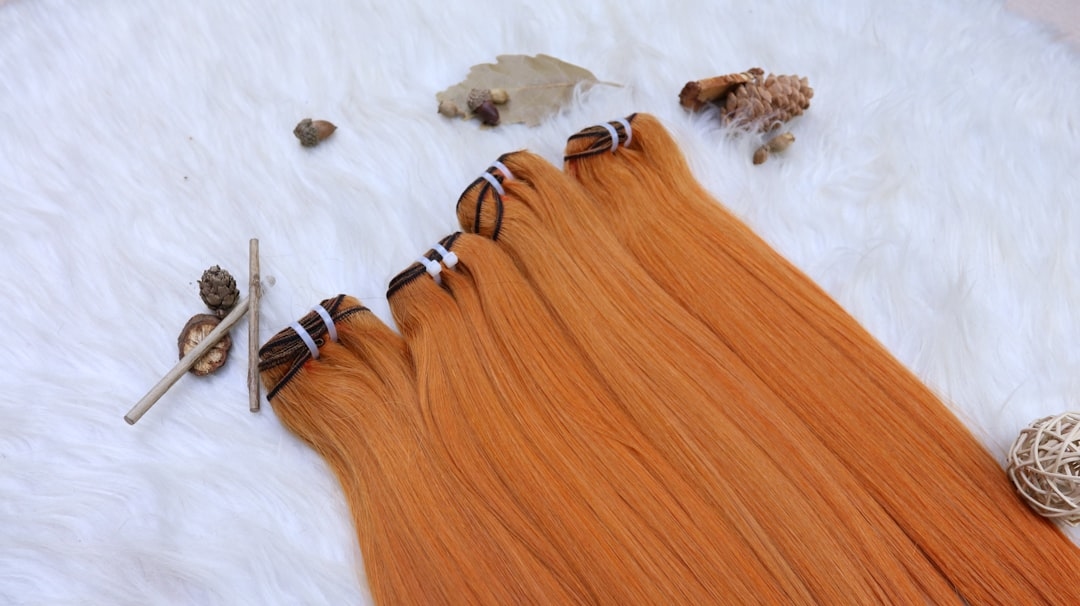
At Ivana Farisei, every consultation involves an assessment of the client’s natural hair in its everyday state — not straightened or freshly washed into an unrepresentative condition, but as it typically looks on a normal day. The stylist looks at the natural colour variation across different parts of the head, the direction of hair growth, the density and texture of the hair, and the typical hairstyles the client wears. This information directly shapes every decision made during the fitting and is the reason the results at Ivana Farisei consistently read as genuinely natural rather than obviously applied.
Clients who arrive at a consultation with a clear sense of the hairstyles they wear most often — and from which angles their hair is most visible — give their stylist the most useful information to work with. A skilled extensionist will ask to see the hair from multiple angles and in different lighting before making any final recommendations about colour or method.

+ There are no comments
Add yours