

Contents:
- Understanding Hair Curlers and Their Types
- Choosing the Right Curler for Your Hair Type
- Preparing Your Hair for Curlers
- Washing and Conditioning
- Drying Your Hair
- Using Styling Products
- Step-by-Step Technique for Using Heated Barrel Curlers
- Setting Up Your Curler
- Sectioning Your Hair
- Rolling the Hair
- Holding Time
- Cooling and Removing
- Final Shake and Styling
- Using Velcro Rollers for Volume and Texture
- Achieving Different Curl Styles
- Loose Beach Waves
- Tight, Defined Curls
- Half-Up Styles with Curls
- Alternating Curls for Dimensional Texture
- What the Pros Know
- Sustainable and Eco-Conscious Curling Options
- Common Mistakes to Avoid
- Troubleshooting: When Curls Don’t Hold
- Maintaining Curls Throughout the Day
- Frequently Asked Questions
- How often can I safely use heated hair curlers?
- Can I use heated curlers on damp hair?
- What size barrel creates the most flattering curls for fine hair?
- How do I make curls last longer without hairspray?
- Is it better to curl dry or damp hair?
- Getting Started With Your Hair Curler Journey
You’re running late for an important meeting. Your straightener is already hot, but what you really want is soft, bouncy waves that look professionally done. You reach for your barrel curler, twist your hair around it, hold for ten seconds, and release—only to end up with a crispy, undefined mess. Sound familiar?
Hair curlers have been a staple of beauty routines for decades, yet many people struggle with technique. The difference between gorgeous waves and frizzy disappointment often comes down to one simple thing: knowing how to use them properly. Whether you’re using ceramic barrels, velcro rollers, or heated wands, mastering the fundamentals transforms your styling game entirely.
This guide walks through everything you need to know about using hair curlers effectively. By the end, you’ll have the knowledge to create professional-looking curls and waves at home, saving both time and money on salon visits.
Understanding Hair Curlers and Their Types
Before diving into technique, it helps to understand what you’re working with. Hair curlers come in several distinct varieties, each suited to different hair types, curl patterns, and desired results.
Heated barrel curlers work by conducting heat through ceramic or tourmaline barrels. They typically heat to between 150°C and 200°C, depending on your hair type. Fine hair requires lower temperatures to avoid damage, whilst thicker hair tolerates higher heat. A good heated barrel set costs between £25 and £60, with premium brands offering temperature control.
Velcro rollers don’t require heat. Instead, they grip your hair due to the velcro surface, holding curls whilst your hair cools naturally. These work particularly well for adding volume at the roots and suit finer hair types better than other methods. They’re the most affordable option at £5 to £15 per set.
Spiral or sponge rollers work best on longer hair and come in various diameters. Thinner rollers create tight ringlets, whilst wider ones produce loose waves. These can be used with or without heat and are gentle on damaged hair.
Hot rollers combine the efficiency of velcro rollers with gentle heat. They warm in a few minutes and deliver consistent results. Expect to pay £20 to £50 for a quality set.
Curling wands and irons work differently from traditional curlers but achieve similar results. Wands have a tapered barrel with no clip, whilst irons have a clamp. The barrel diameter determines curl size: 25mm creates tight curls, 38mm produces loose waves, and 50mm+ creates beachy texture.
Choosing the Right Curler for Your Hair Type
Your hair texture and length significantly influence which curler works best. Fine, delicate hair responds well to velcro rollers or lower-heat options that won’t frizz or cause breakage. Thick, coarse hair benefits from heated tools that penetrate properly.
Short hair (above the shoulders) works best with smaller barrel curlers—25mm to 32mm—whilst medium-length hair suits 38mm to 45mm barrels. Long hair can handle any size, but larger barrels require more length to wrap properly around.
Curly or wavy hair that’s already naturally textured needs lighter-hold products and less aggressive heat. Straight hair often requires more heat or stronger products to lock curls in place.
Preparing Your Hair for Curlers
Preparation makes an enormous difference in how well your curls hold and look. Many people skip this step and wonder why their curls fall flat within hours.
Washing and Conditioning
Start with clean but not freshly-washed hair. Hair that’s been washed yesterday works better than hair washed this morning—it has slightly more natural grip. If you’re using very fresh, squeaky-clean hair, it’ll be too slippery to hold curls well. Condition your ends generously, but avoid conditioning the roots where you’ll be curling.
After washing, squeeze out excess water with a microfibre towel rather than rubbing vigorously. Rubbing creates frizz and damage that won’t hide once your curls are set.
Drying Your Hair
Dry your hair at least 80 per cent before using heated curlers. Damp hair can sizzle and frizz on a hot barrel. A microfibre towel turban works well, or use your blow dryer on a medium setting. For best results, rough-dry with a blow dryer, then let it cool slightly before curling.
Apply a heat protectant spray before any heated styling. Products like Tresemmé Heat Protectant (£2.50 per bottle) or higher-end GHD Total Volume (£18) create a barrier against damage. These aren’t luxuries—they’re protective essentials that keep your hair healthier long-term.
Using Styling Products
Light styling products help curls hold without weighing them down. A volumising mousse applied to damp roots, before drying, creates a foundation that holds curls better. Alternatively, a light hairspray mist on each section before curling helps texture grip.
Avoid heavy oils, leave-in conditioners, or serums on the sections you’re curling. These make hair too slippery. Save rich products for after you’ve finished styling.
Step-by-Step Technique for Using Heated Barrel Curlers
Heated barrel curlers deliver the most consistent results for most people. Here’s the exact process professionals use.
Setting Up Your Curler
Turn on your heated curler and let it reach full temperature—usually 3 to 5 minutes depending on the model. Most quality curlers have a light indicator showing when they’re ready. If your curler has temperature settings, choose based on your hair type: 150°C for fine or damaged hair, 180°C for normal hair, and up to 200°C for thick or resistant hair.
Sectioning Your Hair
Divide your hair into sections using clips. The more sections you create, the more defined your curls will be. A typical approach: four sections (front left, front right, back left, back right) for loose waves, or six to eight sections for tighter curls. Make each section roughly 2 inches (5cm) wide at the base.
Rolling the Hair
Take one section and comb through it completely. Hold the curler barrel horizontally at the ends of your hair. Wrap the hair around the barrel smoothly, rolling towards the root. The wrapping direction matters for styling: rolling away from your face creates waves that frame the face, whilst rolling towards the face creates curls that flip outward.
Wrap the hair tightly enough that it doesn’t slip, but not so tightly that you’re yanking your scalp. You should feel gentle tension, not pain. Smooth the hair as you wrap it—any bumps or creases will transfer to your final curl.
Holding Time
Hold each barrel curler in place for 8 to 15 seconds. Finer hair needs less time (8-10 seconds), whilst thicker hair needs more (12-15 seconds). The exact time depends on how defined you want your curls. Shorter hold times create looser waves; longer times create tighter curls.
A common mistake is holding too long. Excessive heat exposure causes frizz and can even singe your hair. Professionals typically don’t exceed 15 seconds per curl.
Cooling and Removing
Gently unroll the hair from the barrel. The curl will look loose and undefined at first—this is normal. The real shape sets as the hair cools. Pin each warm curl against your head using a clip whilst it cools, or let cool naturally. Wait at least 2 to 3 minutes before moving onto the next section, giving each curl time to set.
Final Shake and Styling
Once all sections are cool, gently run your fingers through your hair to break up the curls slightly. A light hairspray hold (0.5 to 1 second per section) locks the style without making it stiff. Avoid spraying too much, which makes curls feel crunchy and unnatural.
Using Velcro Rollers for Volume and Texture
Velcro rollers work differently from heated barrels and create a lighter, more voluminous result, particularly at the roots. They’re excellent for fine hair or anyone wanting to avoid heat damage.
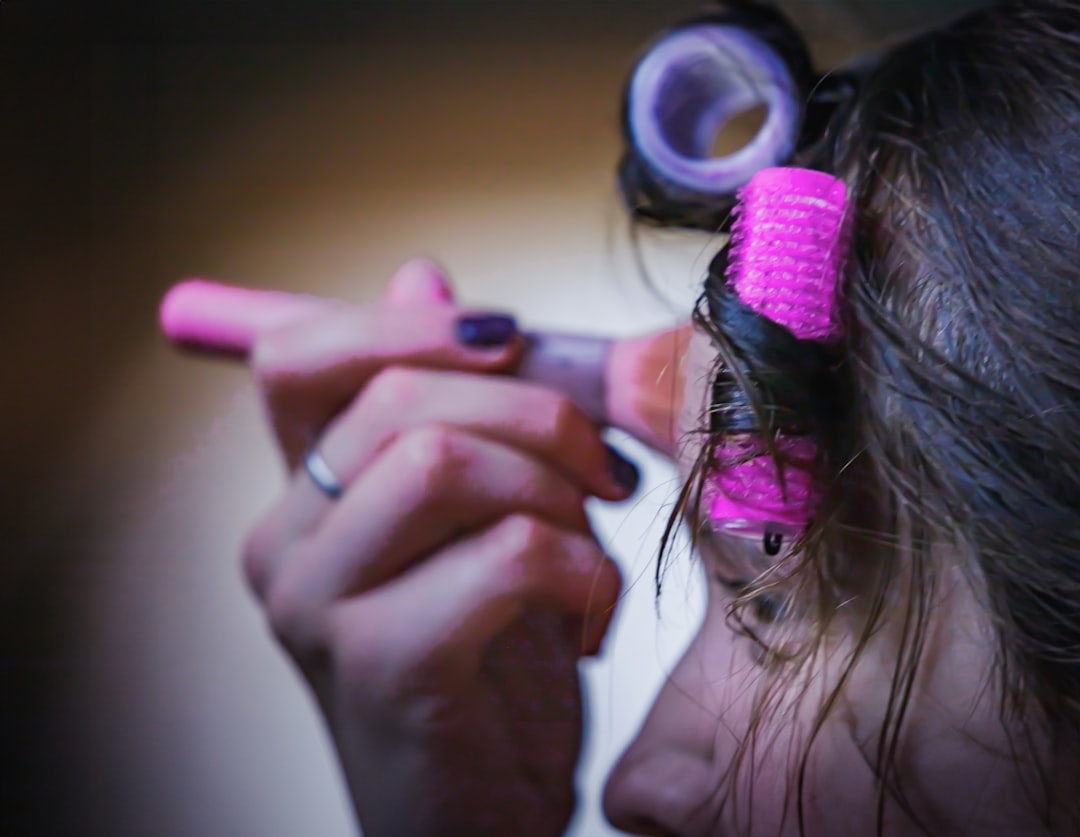
After blow-drying your hair smooth, section it as described above. Roll a section onto the velcro roller, wrapping away from your face. Use a paddle brush to keep the hair smooth as you roll. Once rolled, clip the roller in place.
You can leave velcro rollers in whilst your hair cools naturally (10-15 minutes), or use a hooded dryer to speed up the process. The heat from a dryer helps set the curls, though heat isn’t strictly necessary. Once cool, gently slide the roller out, taking care not to pull the curl apart.
Velcro rollers excel at creating root lift and body, making them ideal for fine or flat hair. They’re gentler than heat tools, making them suitable for daily use without concern about heat damage accumulation.
Achieving Different Curl Styles
Loose Beach Waves
For beachy, undone waves, use larger barrel curlers (45mm to 50mm) and keep hold time short (8-10 seconds). Release the curls and let them cool only partially before running fingers through them. Don’t pin them down tightly. A light texture spray applied beforehand helps this looser style hold longer.
Tight, Defined Curls
Tighter curls need smaller barrels (25mm to 32mm), longer hold times (12-15 seconds), and more products. Apply a curl-defining cream or mousse to damp hair before blow-drying. Pin each curl as it cools to encourage it to set tightly. Let cool completely before removing any clips.
Half-Up Styles with Curls
Curl the bottom layers fully, then use larger barrels on the top section, leaving them slightly looser. Pin the top section back once cooled. This creates dimension and prevents top-heavy appearance.
Alternating Curls for Dimensional Texture
Alternate the direction you curl each section—one away from the face, one towards the face. This creates dimension and prevents the stiff, uniform look some people dislike about curled hair.
What the Pros Know
Professional stylists swear by the “cool down” principle. Never style your hair immediately after curling—wait 5 minutes minimum. The hydrogen bonds in your hair need cooling time to set the new shape. Curls released whilst still warm will drop within an hour. This single trick extends your curl longevity by 4 to 6 hours on average.
Professionals also understand moisture control. They’ll often use a tiny spray of water (not products) on stubborn sections that won’t hold curl. Two or three spritzes of water, allowed to dry slightly, improves grip without product buildup.
Most importantly, professionals recognise that tool quality matters. A £40 ceramic curler heats more evenly and maintains temperature better than a budget model, reducing frizz and breakage significantly over time.
Sustainable and Eco-Conscious Curling Options
If you’re concerned about energy usage or environmental impact, several alternatives exist. Traditional roller sets (velcro, sponge, or pin curls) require no electricity. Many people roll their hair and sleep in it, waking to perfect curls. This overnight method eliminates energy consumption entirely.
Alternatively, look for cordless heated curlers or curlers with automatic shut-off features. Some modern models (like Dyson Corrale or GHD Duet, priced £300-400) consume less power than older models whilst delivering superior results, meaning less frequent use and lower overall energy consumption.
Choose curlers made from recyclable materials where possible. Ceramic and metal last much longer than plastic, reducing replacement frequency and waste. A quality £45 curler used for 5 years has far less environmental impact than replacing cheap curlers annually.
Common Mistakes to Avoid
Curling hair that’s too wet. Water converts to steam on hot barrels, causing frizz and potential hair damage. Ensure hair is at least 80 per cent dry before using heated tools.
Rolling too tightly. Tight rolling creates more frizz and can actually loosen curls as you pull the shape out of your hair. Gentle, smooth rolling produces better results.
Using same barrel size for all hair. Shorter sections need smaller barrels; longer sections suit larger barrels. Mismatched barrel size and hair length creates an awkward, unbalanced look.
Spraying hairspray immediately. Spray whilst curls are still warm, and you’ll partially set them in their loose state. Wait until completely cool, then spray.
Neglecting the underneath layers. Many people curl only the visible top layers. Curling underneath layers creates fuller, more dimensional waves that look intentional rather than patchy.
Using expired products. Old heat protectant or styling products lose effectiveness. Replace heat protectant spray every 6-8 months to maintain protection.
Troubleshooting: When Curls Don’t Hold
If your curls fall flat within an hour, several factors could be at play.
Hair too clean. Recently washed hair is slippery. Wait a day after washing, or use a texturising spray (like Batiste Dry Shampoo, £2-3) the night before to improve grip.
Product buildup preventing grip. Paradoxically, too many products prevent curls from holding. Use only heat protectant before curling, then add styling spray after cooling.
Insufficient hold time. Try extending hold time by 2-3 seconds. Your hair might need more time to set, especially if it’s thick or resistant.
Barrel temperature too low. If your curler is old or broken, it might not reach proper temperature. Test temperature using a piece of tissue paper—it should warm quickly but not singe. Replace if temperature seems low.
Humidity affecting results. On humid days, use a stronger hold hairspray and keep hair away from moisture sources. Anti-frizz serum applied lightly after styling also helps in damp conditions.
Hair condition causing slippage. Damaged, very thin, or over-processed hair sometimes won’t hold curls well. A hydrating mask treatment 1-2 times per week can improve curl retention by strengthening the hair structure.
Maintaining Curls Throughout the Day
Your curls will naturally relax over time. A few tricks extend their lifespan.
Sleep on a silk or satin pillowcase rather than cotton. Cotton creates friction that flattens curls; silk causes minimal friction. Silk pillowcases cost £15-25 but prevent significant damage and curl flattening. Alternatively, braid your hair loosely before bed or wrap it in a silk scarf.
Avoid touching and running fingers through your curls excessively throughout the day. The more you manipulate them, the faster they break down. If you need to restyle, use a light touch.
A texture spray or dry shampoo refreshes curls without re-curling. Spray lightly onto specific areas that have dropped, then gently tease with fingers. This works particularly well by day two of wearing curls.
Steam and moisture weaken curls. Avoid standing directly over kettles, hot drinks, or standing in the bathroom whilst someone showers. The humidity causes curls to relax and lose definition.
Frequently Asked Questions
How often can I safely use heated hair curlers?
Daily use with a heat protectant is generally safe. Without heat protection, limit to 2-3 times weekly. Heat damage accumulates over time, even with protection, so if you style daily with heat, consider one heat-free styling day per week using velcro rollers or heatless methods.
Can I use heated curlers on damp hair?
Damp hair can work, but risks include steam-related frizz and damage. Hair should be at least 80 per cent dry for best results and safety. If you prefer working with damp hair, use lower heat settings and heat protectant spray.
What size barrel creates the most flattering curls for fine hair?
Fine hair flatters best with 32mm to 38mm barrels that create gentle waves rather than tight curls. Larger barrels are more forgiving on thin hair, and you can use lower heat settings. Avoid curlers under 25mm, which can look too extreme on delicate hair.
How do I make curls last longer without hairspray?
Use a curl-setting mousse applied to damp hair before blow-drying. Let curls cool completely before touching. Pin whilst cooling. Use velcro rollers instead of heated tools—they often hold longer. Keep humidity low and avoid touching your hair throughout the day.
Is it better to curl dry or damp hair?
Completely dry hair curls best. Damp hair can steam and frizz on hot barrels. If you prefer starting with damp hair, blow-dry to at least 80 per cent dry first, then use lower heat settings and more heat protectant.
Getting Started With Your Hair Curler Journey
Using hair curlers successfully comes down to understanding your hair type, choosing the right tool, and mastering fundamental technique. Most people see noticeable improvement in their curling results within 3-4 attempts once they’ve internalised these principles.
Start with the method that suits your hair type: heated barrels if you have normal to thick hair, velcro rollers if you have fine hair or want heat-free styling. Invest in a decent quality curler—you’ll use it frequently enough to justify spending £30-50 rather than £10 on a budget option that won’t heat evenly or last long.
Practise your sectioning and rolling technique on one day when you’re not rushed. Once the motion becomes second nature, you’ll reduce styling time and improve results significantly. Most people find that within a month of regular practice, they can create salon-quality waves at home reliably.
Track what works for your specific hair. Note the barrel size, hold time, and products that produce your best results, then repeat. Your hair is unique, and your routine should reflect that rather than following generic instructions blindly.

+ There are no comments
Add yours